What Happens If a Show Is Cancelled or Postponed?
Nobody buys a ticket expecting the show not to happen. But life gets in the way, logistics fall through, and gigs occasionally get pulled or moved. When that happens, the absolute last thing you need is a fight to get your own money back.
Here is exactly how we handle cancellations and postponements—in plain English, with zero runaround.
If a Show Is Cancelled Outright
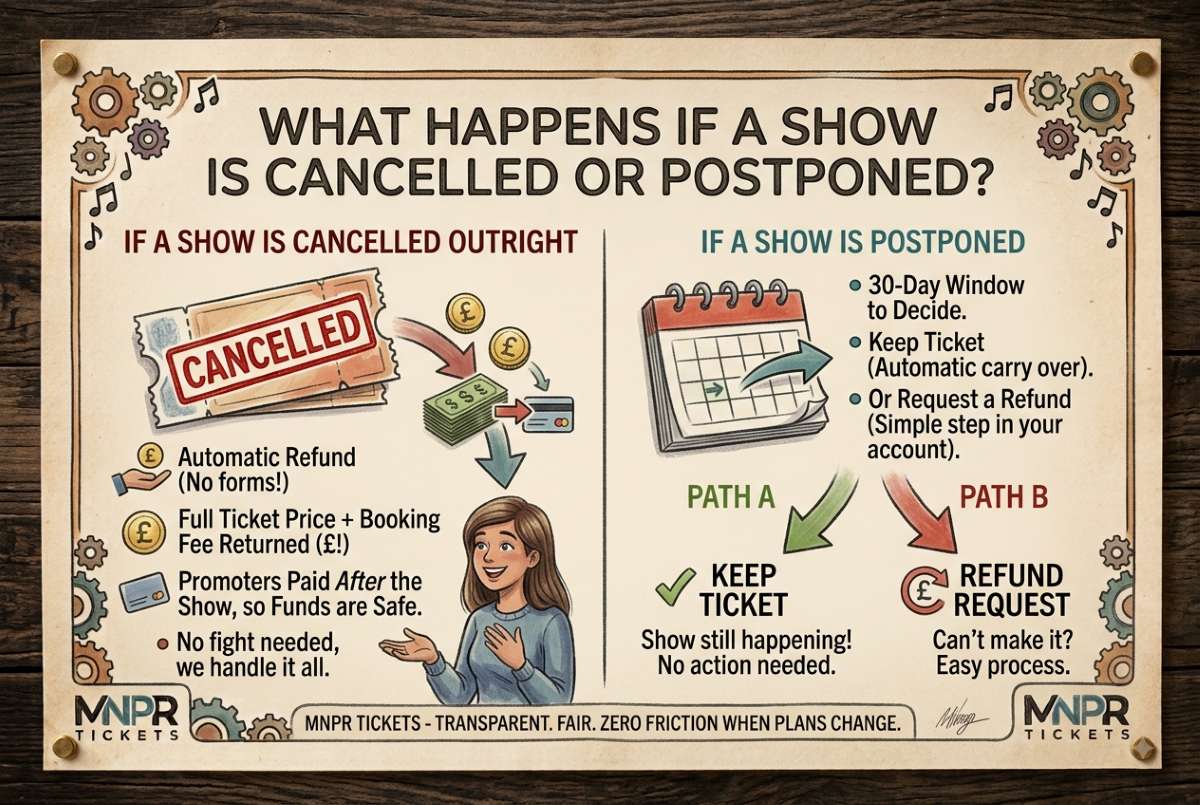
If an event is cancelled, you don't have to do a single thing. You will never be asked to fill in a claim form, submit a support ticket, or chase us up to get what you are owed.
The moment a cancellation is confirmed, your refund is triggered automatically back to the original payment card. That includes the full ticket price and the booking fee. We firmly believe nobody should be out of pocket for a show that never happened—fees included.
What If a Promoter Delays the Cancellation?
This is the scenario most legacy platforms quietly avoid talking about. If a promoter is slow, unresponsive, or fails to action a cancellation that everyone knows is happening, we don't just throw our hands up.
We have built our system so we can step in and action the cancellation on our platform ourselves. You will never be left stranded in administrative limbo, waiting indefinitely on one person to do the right thing before seeing your money again.
Why You Can Actually Trust Our Refund Guarantee
It is easy to make promises about refunds, but here is the technical structure that ensures we can actually deliver on them: promoters are not paid out ticket revenues until after an event has taken place.
Because the money from ticket sales is securely held until the gig successfully happens, the funds needed to refund everyone are always sitting there, ready to go. You aren't relying on a promoter having cash left in their bank account to get your money back; the capital is already protected.
If a Show Is Postponed Rather Than Cancelled
A postponement is slightly different because the gig is still going ahead—just not on the date you originally planned for.
Once a new date is officially confirmed, you have 30 days to figure out if you can still make it:
If you can make the new date: You don't have to do anything. Your existing ticket automatically transfers over to the new date.
If you can't make it: You can request a full refund directly through your account within that 30-day window. No long explanations required, no hassle.
The Bottom Line
A ticket is an agreement that an event is going to happen on a specific date. When that promise can't be kept, the least a ticketing platform can do is make setting things right as painless as possible. Handling refunds with fairness and speed isn't a favour—it's just basic accountability.